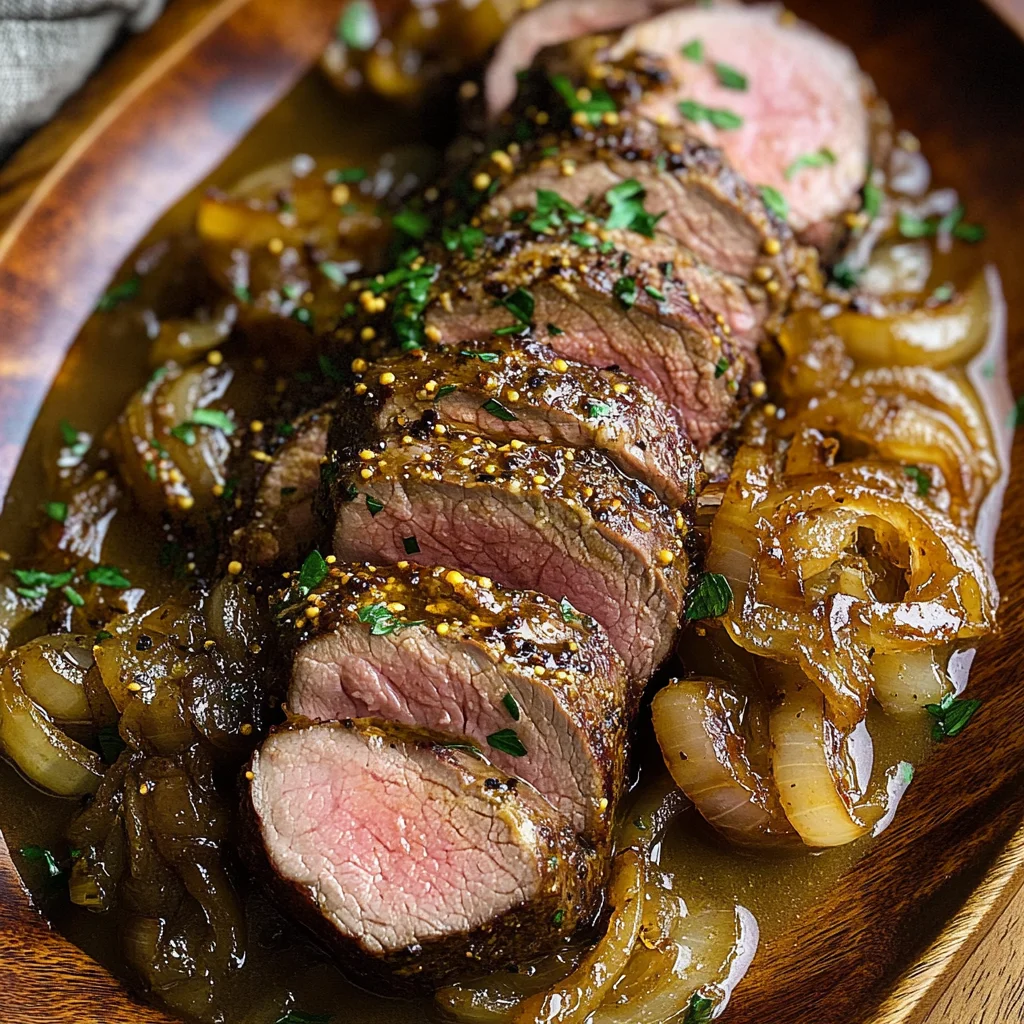
Maple Mustard beef Tenderloin with Caramelized Onions
There’s something deeply moving about cooking, isn’t there? It’s not just about the ingredients or the technique; it’s about the stories we weave, the love we pour into each dish, and the connections we create around the table. Today, I want to share a recipe that has become a cherished favorite in my home: Maple Mustard Beef Tenderloin with Caramelized Onions. This dish is more than just a meal; it’s an experience that brings warmth and joy to any gathering. With each bite, you’ll savor the beautifully balanced flavors of sweet maple and tangy mustard, perfectly complemented by the rich depth of caramelized onions. Picture this: as you slice into the tender beef, your kitchen fills with an aroma so intoxicating that it draws everyone in—family, friends, and even neighbors! Each element of this dish harmonizes beautifully, creating a symphony of flavors that will linger in your memory long after the last forkful is gone.
I’ve always been captivated by how food can tell a story; it can evoke nostalgia and create new memories simultaneously. This Maple Mustard Beef Tenderloin stands out not just for its exquisite taste but also for its versatility. Whether it’s a cozy weeknight dinner or a special occasion like a birthday or anniversary, this dish never fails to impress. The contrast between the sweetness of maple syrup and the sharpness of grainy mustard is utterly divine—it creates a dance on your palate that feels both comforting and exciting. And let’s not forget those caramelized onions! They add an earthy sweetness that transforms this dish into something truly extraordinary. Trust me when I say that once you try it, you’ll be dreaming about it long after the dinner plates have been cleared.
Maple Mustard Beef Tenderloin with Caramelized Onions: A Culinary Embrace
Let’s embark on this culinary journey together! As we prepare this delicious Maple Mustard Beef Tenderloin with Caramelized Onions, you’ll discover just how rewarding home cooking can be. The process may seem intricate, but I promise you—it’s all worth it in the end! So roll up your sleeves and let’s get started!
Ingredients:
The heart of every great recipe lies in its ingredients, and for our Maple Mustard Beef Tenderloin with Caramelized Onions, we’re using some truly wonderful components that will elevate our dish to new heights.
-
2 beef tenderloins (approximately 1 pound each). The star of our show! Beef tenderloin is renowned for its tenderness and flavor; it’s one of those cuts that practically melts in your mouth when cooked correctly. When selecting your tenderloins at the market or butcher shop, look for a bright red color with good marbling—this marbling is essential as it keeps the meat juicy while roasting. Remember to ask your butcher to trim any excess silverskin if you’re unsure how to do it yourself—this step is crucial for ensuring a tender bite.
-
2 tsp kosher salt (divided). Salt is not just seasoning; it’s flavor enhancement at its finest! Here, we’re using kosher salt because its larger crystals make it easier to control during seasoning. Dividing the salt helps us season at different stages without overwhelming our tenderloin’s natural flavor. This step ensures every layer gets well-seasoned without losing balance.
-
½ tsp pepper (divided). Freshly cracked black pepper adds warmth and depth to our dish. It complements all other flavors beautifully without overpowering them. Just like salt, we’ll divide this seasoning so we can build layers of flavor throughout our cooking process.
-
½ tsp each garlic powder, onion powder, dried thyme – These dried herbs are essential players in our flavor ensemble! Garlic powder offers deep umami notes while onion powder enhances sweetness without adding moisture (which could affect texture). Dried thyme brings an aromatic earthiness that’s both comforting and sophisticated—a perfect pairing with beef.
-
¼ tsp each paprika and poultry seasoning. Paprika adds a lovely color and subtle smokiness to our dish while poultry seasoning introduces hints of sage and rosemary—flavors that meld wonderfully with beef!
-
2 sweet onions (thinly sliced). Sweet onions are ideal here due to their natural sugars that caramelize beautifully under low heat. As they cook down slowly in butter and olive oil, they transform into rich golden nuggets of flavor that will serve as an incredible base for our tenderloin.
-
2 tbsp olive oil (divided). Olive oil acts as both cooking fat and flavor enhancer in this recipe—its fruity notes complement our ingredients perfectly. Using quality extra virgin olive oil is essential here; it’ll add richness while helping achieve that gorgeous sear on our beef!
-
1 tbsp butter. Butter contributes creaminess while adding complexity through browning—a technique known as Maillard reaction—which enhances both aroma and taste!
-
¼ cup maple syrup. This liquid gold provides sweetness that balances out savory elements beautifully! Look for real maple syrup (not imitation) for an authentic flavor experience—you’ll be amazed at how much richer everything tastes!
-
1 ½ tbsp grainy mustard. Grainy mustard offers texture along with tanginess—a delightful contrast against maple syrup’s sweetness! It acts almost like glue for all flavors present while enhancing depth overall.
-
2 garlic cloves (minced). Fresh garlic elevates dishes beyond measure! Sautéing minced garlic releases aromatic oils that will fill your kitchen with an enticing scent as they mingle during cooking.
-
1 tbsp balsamic vinegar & ½ tsp Worcestershire sauce. Both ingredients bring acidity which brightens up heavier flavors found elsewhere—balsamic adds sweetness while Worcestershire infuses umami complexity necessary for balance!
-
½ cup beef broth. Broth serves two purposes: keeping our meat moist during roasting AND providing depth when deglazing after searing! Opt for low-sodium varieties so we can control final seasoning levels ourselves.
Now that we’ve gathered all these wonderful ingredients together let’s move on to ensuring we have everything we need at hand before diving into preparation!
Equipment You’ll Need:
Cooking becomes infinitely more enjoyable when you have the right tools at your fingertips! These essential partners will help guide you through creating something truly magical from scratch.
-
Sharp boning knife or thin-bladed knife: This tool is key when trimming silver skin from beef tenderloins—having a sharp blade allows precision cuts without damaging precious meat underneath! If you don’t have one handy, any quality chef’s knife works too but ensure it’s well-maintained for optimal performance.
-
Cutting board: A sturdy cutting board prevents slipping while chopping vegetables or slicing meats; consider using separate boards for proteins versus produce to avoid cross-contamination.
-
Wide skillet: An absolute must-have here—it provides ample surface area needed for sautéing onions evenly without overcrowding them during cooking time!
-
Wooden spoon: Ideal stirring companion throughout various stages—from mixing spices into rubs all way through deglazing pan after searing meat!
-
Roasting pan: This trusty vessel holds everything together nicely while allowing heat circulation around contained ingredients thus promoting even cooking results across board!
Step 1: Trimming & Preparing Your Tenderloins
To start off our culinary adventure successfully, we need to give those beef tenderloins some love by trimming away any silver skin—the thin connective tissue clinging tightly around them—that could prevent us from achieving optimal tenderness later on during roasting time! Take your sharp boning knife or thin-bladed knife (remember safety first!) slide underneath one end until you’ve made enough separation from flesh itself then grasp firmly onto flap itself pulling taught as if you’re performing surgery—this motion keeps things steady allowing blade easily glide beneath silverskin without digging too deep into actual muscle below it which could lead toughness later down line… Discard remnants once done—you won’t miss them I promise!
Step 2: Creating Our Flavorful Rub
Next up comes creating mouthwatering spice rub sure enhance natural essence found within those beautiful pieces of meat we’ve prepared earlier! In small bowl combine together remaining salts/peppers alongside garlic powder/onion powder/dried thyme/paprika/poultry seasoning before rubbing mixture generously over entire surface area covering both sides thoroughly ensuring maximum infusion takes place prior roasting session begins later down road… Don’t rush this step either—allowing seasoned medallions rest anywhere between forty-five minutes up few hours greatly improves overall finished product quality since flavors meld together nicely whilst drawing moisture back toward surface area resulting juicier bites when finally served alongside luscious caramelized onions at end game!
Step 3: Caramelizing Our Onions
In wide skillet over medium heat melt butter combined olive oil until bubbling gently before adding slices sweet onions along generous pinch kosher salt early on so they soften quickly instead merely browning outright… Stir occasionally letting them cook low slow approximately forty-five minutes maintaining patience throughout process watching closely prevent sticking/burning while developing beautiful golden hues reflecting transformation happening right before eyes—you want those bad boys glistening decadently by time they’re ready transfer roasting pan where they’ll serve as luscious bed upon which tenderloins can rest peacefully whilst absorbing flavors emanating forth during baking phase soon thereafter…
Step 4: Prepping For Roasting
With onions now transformed into melted gold goodness set aside waiting patiently return focus toward oven preheating up four hundred degrees Fahrenheit meanwhile combining maple syrup/grainy mustard/minced garlic/balsamic vinegar/Worcestershire sauce plus remaining salt/pepper until everything melds harmoniously creating thick glaze guaranteed elevate final experience exponentially once poured over top medallion beauties placed lovingly atop caramelization heaven previously created… Trust me this part crucial don’t skip out—it’ll bring balance needed finish strong come final presentation stage later down line when served hot alongside parsnip apple purée perfection pairings alongside above mentioned indulgence so prepared ahead time allows plenty opportunity showcase talents developed throughout culinary journey taken thus far…
Stay tuned—we’re just getting started on preparing this exquisite Maple Mustard Beef Tenderloin with Caramelized Onions!
Step 5: The Sweet and Savory Symphony Begins
Now, let’s dive into creating the delightful glaze that will elevate your beef tenderloin to new heights. In a small mixing bowl, combine the ¼ cup of pure maple syrup with 1 ½ tablespoons of grainy mustard, minced garlic, 1 tablespoon of balsamic vinegar, and ½ teaspoon of Worcestershire sauce. This mixture is where the magic happens; it’s not just about flavor but a harmonious balance of sweetness and tang that will contrast beautifully with the rich beef. The maple syrup adds a depth of flavor that is utterly intoxicating, while the grainy mustard contributes a lovely texture and sharpness that cuts through that richness. Trust me on this—this glaze isn’t just an afterthought; it’s absolutely paramount to achieving an extraordinary dish.
Once everything is combined, give it a good stir until you achieve a well-blended consistency. You want to make sure all those flavors are mingling together beautifully because they’ll coat the tenderloin and infuse it with their glorious essence as it roasts. Set this aside for now; we’ll come back to it shortly. Remember, patience here pays off! Let those flavors marry for at least 10 minutes while we prepare for the next exciting step.
Step 6: Searing for Flavor – The Maillard Effect
Now we arrive at one of my favorite techniques in cooking: searing! It’s such an essential step because it creates that deep golden-brown crust on the outside of your tenderloin—this is known as the Maillard effect, which forms complex flavors and aromas that make your taste buds dance with joy. Heat a skillet over high heat and drizzle in the remaining tablespoon of olive oil. Wait until the oil shimmers like liquid gold before adding your seasoned beef tenderloins.
Sear each side for about two to three minutes, turning occasionally to ensure all sides are equally caramelized. What you’re looking for here is that beautiful brown crust—don’t rush this step! It’s so tempting to keep moving the meat around, but allowing it to sit undisturbed lets that gorgeous crust form. When you see those lovely brown bits starting to develop at the bottom of your pan, know you are on the right track! These bits are packed with flavor and will play an important role in our next steps.
Step 7: Building Depth with Deglazing
Once your tenderloins are perfectly seared, transfer them carefully into your roasting pan resting atop the caramelized onions from earlier (which should be tantalizingly fragrant by now). Now comes another critical moment—the deglazing process! Using the same skillet where you seared the beef, pour in ½ cup of beef broth over medium heat. As it simmers gently, take a wooden spoon and scrape up all those flavorful brown bits stuck to the bottom of the pan. This process not only helps clean your skillet but also captures all those concentrated flavors developed during searing—don’t waste any of that goodness!
Bring this broth to a gentle simmer and then add in our previously prepared maple mustard mixture. This is where everything starts coming together beautifully—the sweet glaze combined with rich broth creates an absolutely incredible sauce that will drape over our tenderloin like a warm hug. Allow this simmering concoction to cook for about three to four more minutes until it reduces slightly; you’ll notice it thickens up just enough to cling onto your meat when poured over it later. Keep stirring occasionally; you want this sauce to be silky smooth without any lumps.
Step 8: Roast Until Perfectly Juicy
With everything prepped and ready, let’s move on to roasting! Preheat your oven to 400°F (200°C) if you haven’t done so yet; this temperature is just right for achieving that perfect medium-rare center while keeping the outside beautifully browned. Pour that luscious sauce over your tenderloins nestled among those caramelized onions in your roasting pan—all those flavors melding together is simply heavenly!
Roast in the oven for about 15-20 minutes or until you reach an internal temperature of 145°F (63°C) using a reliable meat thermometer inserted into the thickest part of one tenderloin. This step is crucial; using a thermometer ensures precision, allowing you to avoid undercooking or overcooking what should be melt-in-your-mouth perfection! While roasting, keep an eye on how things are looking; if you notice too much browning on top, feel free to loosely cover with foil—it’s all about achieving balance.
Once done, remove from oven and transfer those succulent tenderloins onto a cutting board—let them rest for about 10-15 minutes before slicing into them. Resting might seem like torture when you’re hungry (believe me, I feel you!), but it’s vital! This allows juices within the meat time to redistribute throughout instead of spilling out onto your cutting board upon slicing—a juicy result is what we want!
Final Touches
Step 9: The Artful Presentation
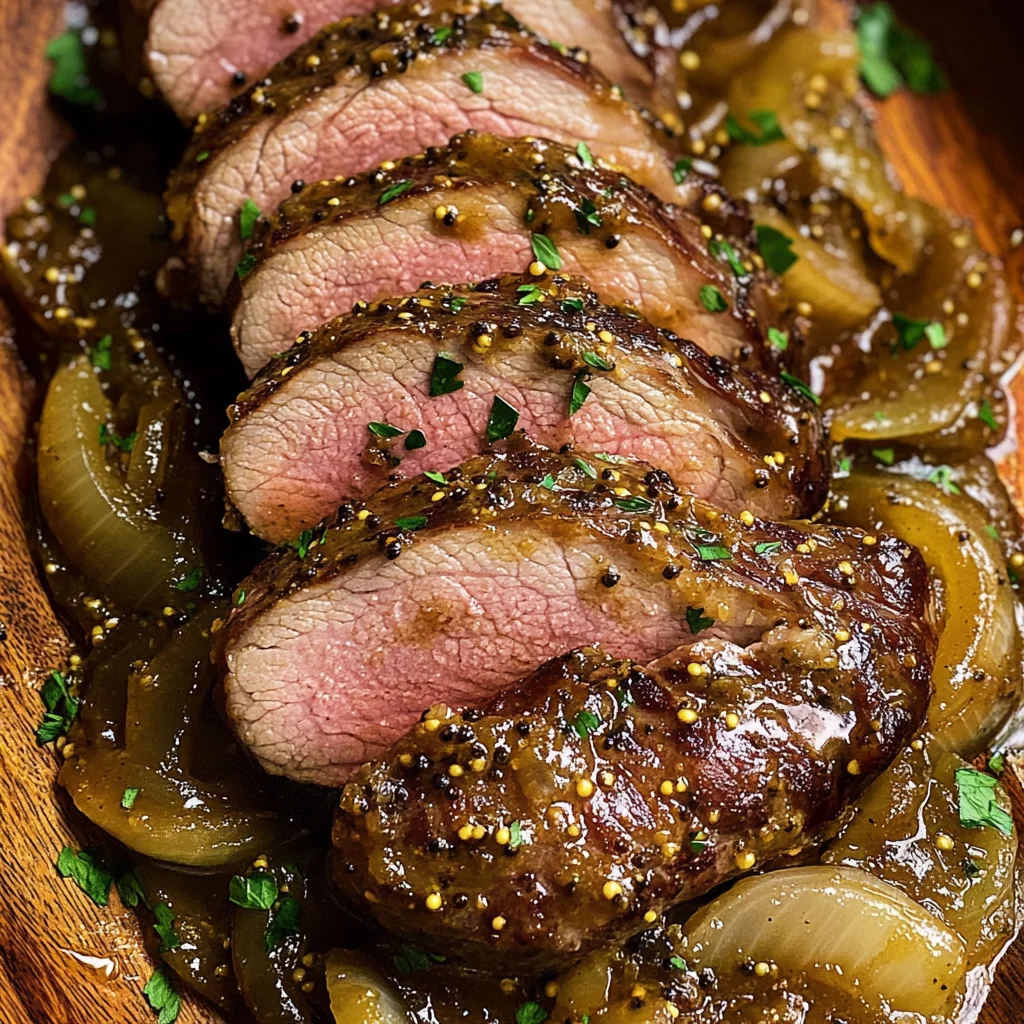
At last, we’ve reached one of my favorite moments—the plating! This part is where all your hard work truly shines through and transforms into something artful and inviting on your table. Start by slicing each beef tenderloin into medallions approximately one inch thick—each slice will reveal that beautiful pink center surrounded by savory crustiness.
On a serving platter or individual plates (if you’re feeling fancy), arrange those decadent caramelized onions from earlier as a bed for your slices of beef. Arrange them lovingly atop these sweet onion clouds—they provide not only flavor but also contrast against the rich meat beneath them. Finally, spoon any remaining pan juices generously over everything—you don’t want any drop left behind because trust me when I say this sauce is pure magic!
To elevate this dish even further (if that’s possible), consider pairing it with something fresh like sautéed greens or perhaps some roasted vegetables alongside parsnip and apple purée for an extra hint of sweetness—that symphony of flavors will sing harmoniously together!
As you serve this Maple Mustard Beef Tenderloin with Caramelized Onions at your dinner table, take a moment to appreciate what you’ve created—a truly extraordinary meal made from love and passion—and watch as faces light up with every bite taken! Enjoy every moment knowing you’ve crafted something memorable that’ll surely delight everyone gathered around your table tonight.
Storage and Enjoyment Tips for Your Maple Mustard Beef Tenderloin with Caramelized Onions
Now that your Maple Mustard Beef Tenderloin with Caramelized Onions has made its grand entrance onto your dining table, it’s time to revel in the symphony of flavors you’ve just created! Trust me, the moment you slice into that perfectly tender beef, revealing its juicy pink center nestled atop a bed of sweet, golden onions, will be an experience you won’t forget. But what about those delightful leftovers? Well, I’m here to share some secrets on how to savor this dish even longer!
Storing Leftover Maple Mustard Beef Tenderloin with Caramelized Onions
To keep your delectable creation fresh and flavorful, store any leftovers in an airtight container. It’s essential to let the tenderloin cool down to room temperature before sealing it up; this prevents condensation from forming inside the container, which can lead to unwanted sogginess. Place your masterpiece in the fridge, where it will stay delicious for up to three days. If you’re like me and love the taste of your leftovers, here’s a pro tip: placing a slice of bread in the container can help absorb moisture and maintain that tender texture! After storage, you’ll find that the flavors meld beautifully, creating a rich taste experience that’s just as satisfying as when it was freshly cooked. When you’re ready to enjoy it again, simply reheat gently in a skillet over low heat or pop it in the microwave for a quick meal—just be careful not to overdo it and dry out your succulent beef!
Freezing Components for Later
If you’re looking to extend the life of this stunning dish even further, consider freezing portions of your Maple Mustard Beef Tenderloin with Caramelized Onions. To do this properly, slice the tenderloin into medallions before placing them in freezer-safe bags or containers. Be sure to remove as much air as possible to prevent freezer burn; I often use a straw to suck out excess air before sealing! These can last in the freezer for up to three months without losing their divine flavor. When you’re ready for a comforting dinner down the line, simply thaw overnight in the refrigerator and reheat gently—this option not only saves you time but also allows you to relish that unforgettable flavor combo at a moment’s notice. The convenience factor is absolutely paramount here; imagine having gourmet leftovers waiting for you after a long day!
Dinner
Maple Mustard Beef Tenderloin with Caramelized Onions
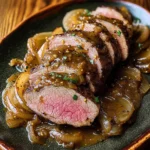
Indulge in the exquisite flavors of Maple Mustard Beef Tenderloin with Caramelized Onions. This dish combines succulent beef tenderloin with a delightful glaze made from pure maple syrup and grainy mustard, perfectly balanced by the rich sweetness of caramelized onions.
- Prep Time: 30 minutes
- Cook Time: 60 minutes
- Total Time: 1 hour 30 minutes
- Yield: Approximately six servings 1x
- Category: Main
- Method: Roasting
- Cuisine: American
Ingredients
- 2 beef tenderloins (approximately 1 pound each)
- 2 tsp kosher salt (divided)
- ½ tsp black pepper (divided)
- 2 sweet onions (thinly sliced)
- ¼ cup maple syrup
- 1 ½ tbsp grainy mustard
- 2 tbsp olive oil (divided)
- 1 tbsp butter
- ½ cup beef broth
- 2 garlic cloves (minced)
Instructions
- Preheat your oven to 400°F (200°C).
- Trim silver skin from beef tenderloins and season with salt, pepper, garlic powder, onion powder, thyme, paprika, and poultry seasoning.
- In a skillet, heat olive oil and butter over medium heat. Add sliced onions, sprinkle with salt, and caramelize for about 45 minutes until golden brown.
- In a bowl, combine maple syrup, grainy mustard, minced garlic, balsamic vinegar, Worcestershire sauce, and remaining salt and pepper to create the glaze.
- Sear seasoned tenderloins in the same skillet until browned on all sides (about 2-3 minutes per side).
- Place caramelized onions in a roasting pan and lay seared tenderloins on top. Pour the glaze over everything.
- Roast for 15-20 minutes or until internal temperature reaches 145°F (63°C). Let rest for 10-15 minutes before slicing.
Nutrition
- Serving Size: 1 slice (approximately 4 oz)
- Calories: 290
- Sugar: 8g
- Sodium: 600mg
- Fat: 16g
- Saturated Fat: 6g
- Unsaturated Fat: 10g
- Trans Fat: 0g
- Carbohydrates: 12g
- Fiber: 1g
- Protein: 24g
- Cholesterol: 75mg